

PORTUGAL: Police use excessive force at protest camps for housing rights

On 12 October, the police removed tents installed by housing rights protesters at Praça D. João I in Porto. The encampment followed a demonstration of around 1,500 people against rising living costs and housing unaffordability held on 10 October by the “Não consegues pagar renda? Traz tenda” movement (“Can’t pay rent? Bring a tent”). Protesters used the tents to maintain a visible, ongoing protest demanding better access to affordable housing. The Porto Municipal Council justified the intervention on the grounds of the “unauthorised occupation of public property.” .
Protesters say that the removal raises concerns about the right to use public space, and the freedoms of peaceful assembly and expression in a context in which people increasingly struggle to access affordable and quality housing, and housing prices have risen faster than in most other European countries.
According to Amnesty International Portugal, reports indicate that police used excessive force to disperse the peaceful housing protest camp in the early hours of 15 October, resulting in 37 injuries. According to activists and their lawyers, 35 people sustained minor injuries and two sustained serious injuries. Among the injured was a person with a disability. Another protester required nine stitches after being hit on the head with a baton. Amnesty reported that the intervention followed Porto Mayor Pedro Duarte’s statement that he would take an “absolutely intransigent” stance against attempts to erect tents in the square. On 21 October, media reports state that 55 people were arrested in Porto and Lisbon in relation to the protests.
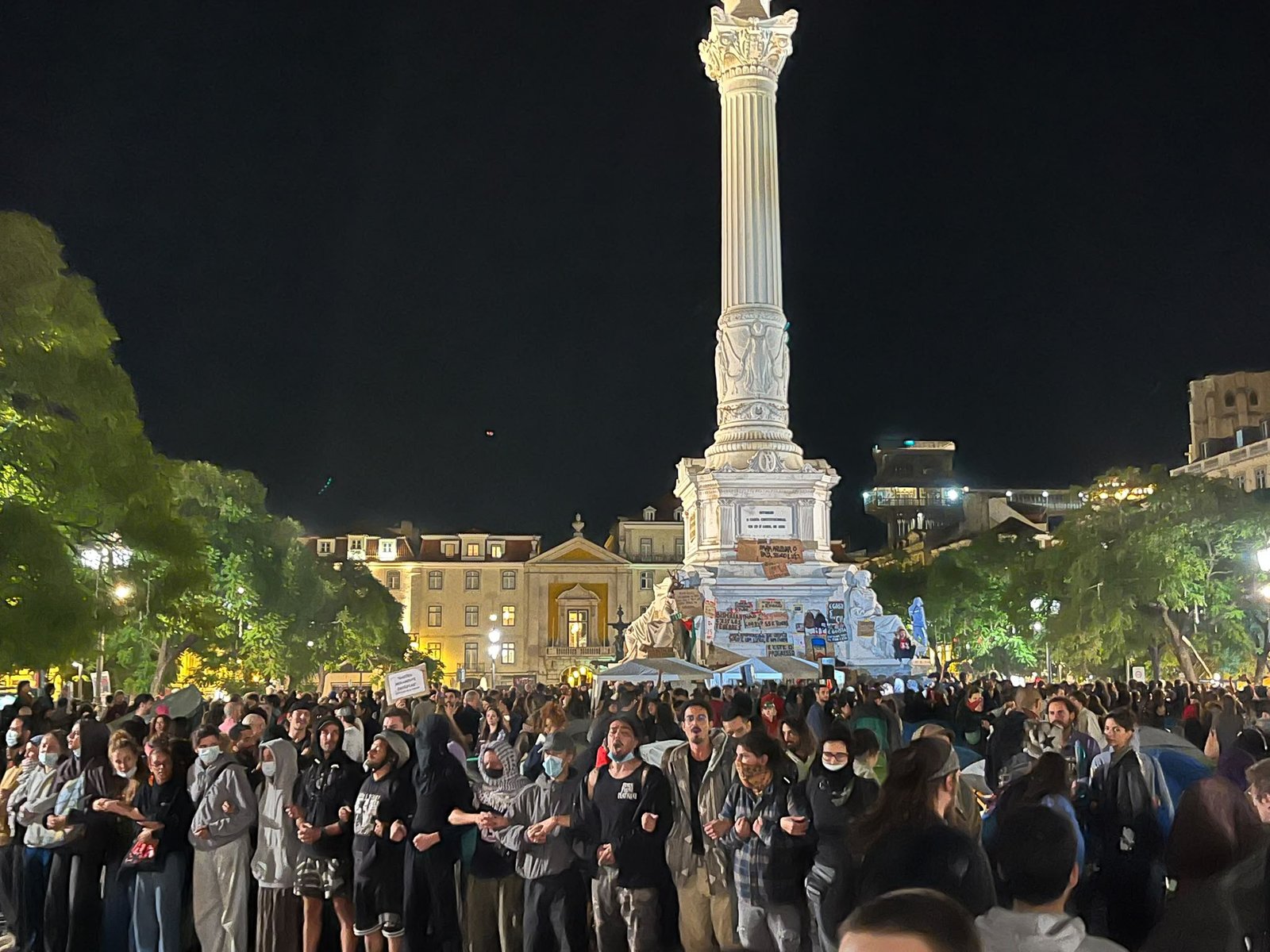
On 25 October, largely peaceful housing rights protests in Lisbon and Porto were dispersed by the special police unit, who used batons and deployed police dogs, riot equipment, and less-lethal projectile launchers. Protest organisers report that rubber bullets were fired resulting in dozens of injuries, while the authorities reported 11 injuries and 31 arrests for “disobedience”. The authorities described the operation as necessary to “restore legality” and ensure the normal use of public space. It referred to the continuation of the protests beyond the legally established time limit, alleged damage to public property, the installation of unauthorised tents, and the protesters’ refusal to remove the structures and disperse.
According to international human rights standards law enforcement is obliged to exhaust non-violent means and to give prior warning if it becomes absolutely necessary to use force, unless doing either would be manifestly ineffective. Any use of force must comply with the fundamental principles of legality, necessity, proportionality, precaution, and non-discrimination, and those using force must be accountable for each use of force.
Senior national and municipal officials have repeatedly framed the encampments as unlawful occupations, deliberate provocations, or potential sources of disorder:
- The prime minister warned political and civil-society actors against importing a “climate of instability”,
- the mayor of Porto claimed that some protesters intended to provoke disturbances and promised to be “absolutely relentless” regarding the installation of tents
- Lisbon’s mayor repeatedly associated the protests with vandalism, and
- the interior minister announced that the police would act “pre-emptively”