
FRANCE: “Breakers pay” bill threatens the right to protest


On 27 October, the French Senate adopted the bill known as “Casseurs-payeurs”, or “breakers pay” in a fast-track proceeding. The law would require participants in protests to pay for damages committed during the protests, even if a person is not responsible for the destruction. Civil society organisations (CSOs), trade unions, and legal experts have criticised the bill as a new serious attack on the right to protest in France, warning that it could be used arbitrarily. The law would also breach France’s international human rights obligations, which clearly state that participants in a protest can only be held responsible for their own actions.
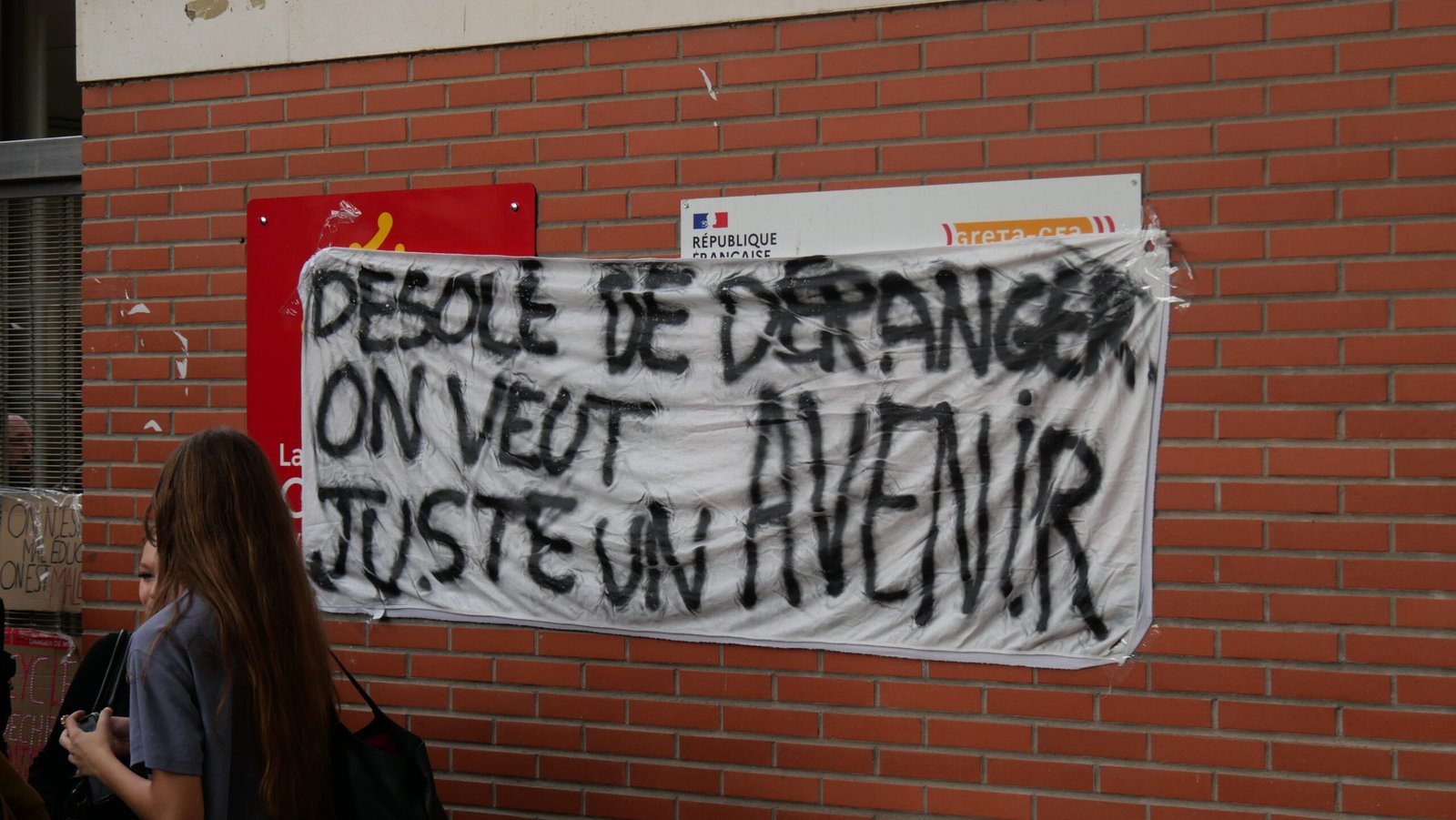
The law was first proposed after violence and property damage that broke out in Paris following a football match in May 2026. The government, led by Interior Minister Laurent Nuñez, presented the bill as a way to repair damage caused during public unrest. However, the proposal was pushed forward with urgency after the student protests in October 2026 across France.
The most dangerous provisions of the law proposal are the introduction of collective responsibility. A person could be held liable for damage committed during a protest simply because they participated in the protest or gathering during which violence, theft, or destruction occurred. Individuals could be ordered to pay up to €10,000 each as collective punishment. In cases of non-payment, the state would be able to seize social benefits for damage repair or evict them from social housing. Furthermore, parents could be held responsible for acts committed by their children. According to Amnesty International France, these provisions risk disproportionately burdening people who are already in a financially precarious situation, making public participation and the exercise of fundamental rights a huge economic risk.
Beyond the financial consequences, the bill raises questions over the rule of law. Under the principle of the presumption of innocence, a person is held responsible for their own actions. The bill violates this principle by imposing responsibility without personal fault or proven causation. The law proposal also includes an amendment that would grant authorities powers to restrict access to social media platforms if they fail to remove content encouraging violence or destruction and expands the use of drones and algorithmic video surveillance during protests. It also creates new administrative barriers to prevent certain people from taking part in protests if they are labelled as dangerous, even if they haven’t been convicted before.
Questions have also been raised as to how the law could be applied in practice. In cases where police struggle to identify specific individuals in large crowds, it is unclear who would be considered as being part of the group that commits violence or damage. The law’s practical enforcement risks being ambiguous and includes a very broad range of people who could theoretically fall within its scope, possibly leading to a chilling effect on civic engagement and protest. The bill is next to be debated in the National Assembly and would then need to be approved by the Constitutional Council.