

SPAIN: Housing rights protests across the country

In recent weeks, Spain has witnessed mass protests for housing rights. They began with an eviction and have since grown into the country’s most significant housing mobilisation in years, with a general strike now set for 11 November and a snap general election called for 29 November after Prime Minister Pedro Sánchez failed to pass reforms.
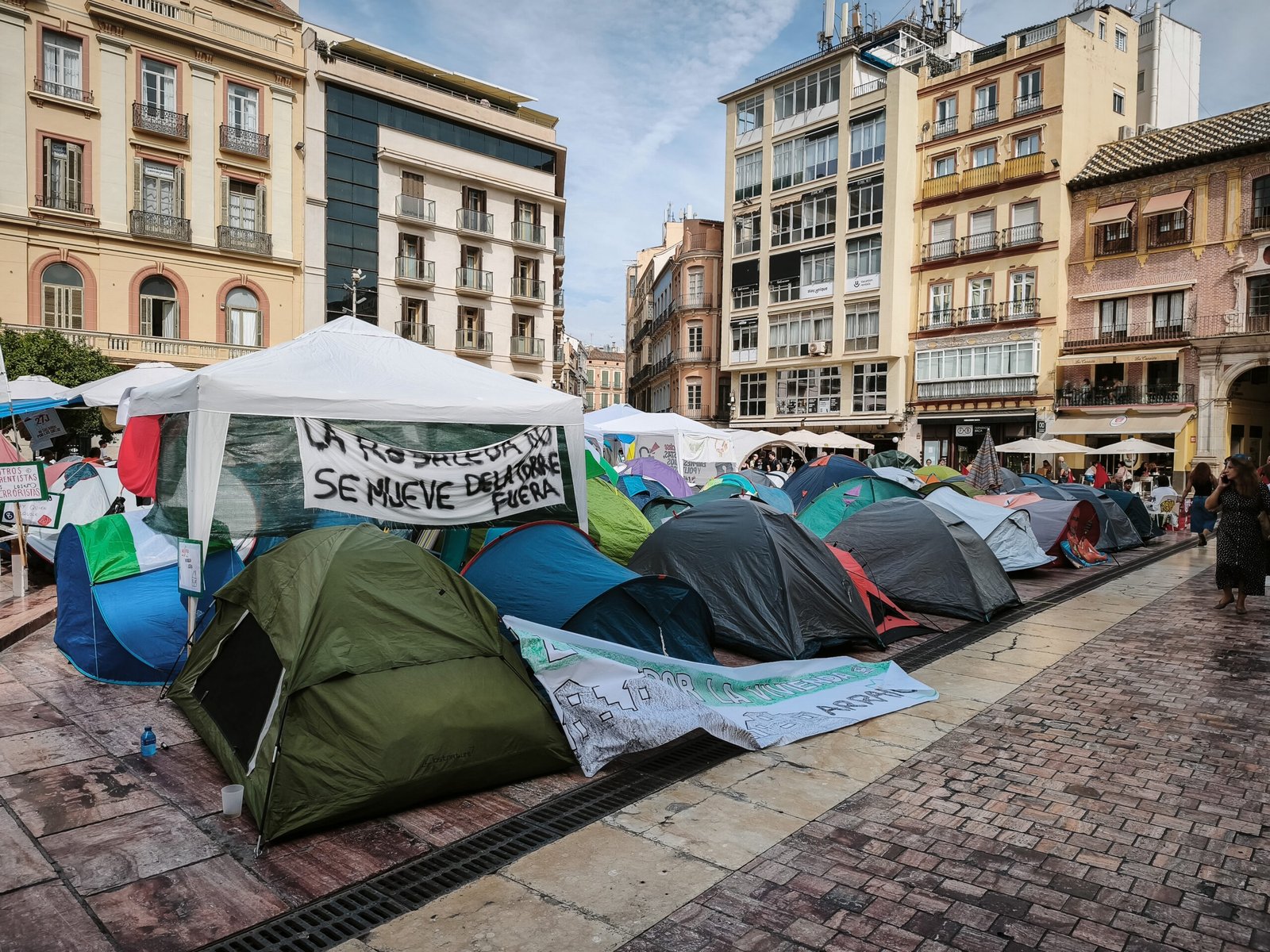
Maricarmen Abascal, an 87-year-old tenant with disabilities, who had lived in her flat in Madrid’s Retiro district for over seventy years, was evicted on 23 September. The eviction, which Amnesty International Spain called a human rights violation and a failure of the state institutions, set off several waves of protest. A mass demonstration in Madrid on 26 September drew 300,000 people. Thousands of people also protested in other cities across Spain. An occupation of Puerta del Sol in central Madrid has continued since 26 September, and tent camp protests have been going on in at least Barcelona, València, and Alicante. Trade unions, together with tenants’ organisations, have called for a 24-hour general strike for housing and decent wages on 11 November. It will be the first joint general strike since 2012.
Under public pressure, the investment company that owned Abascal’s apartment had agreed to allow her to return home, but she died in hospital before she could. Hundreds of activists were removed by the police from the building entrance during the eviction, and observers reported police violence, beatings with batons and the use of pepper spray to remove journalists from the area. Some activists were dragged, held by the neck or carried out. An earlier case in Catalonia had already drawn attention to the human cost of evictions. On 7 September, a 54-year-old woman in Barcelona took her own life five months after being evicted from the flat where she had lived for more than 20 years.
The protests escalated on 2 October when Congress rejected two housing reforms, with the Partido Popular, the far-right Vox, and the Catalan pro-independence party Junts voting against. One decree, the “Maricarmen decree”, would have extended the suspension of evictions of vulnerable households until 2030 and restricted purchases by investment funds. The other provided for automatic rent extensions. Prime Minister Pedro Sánchez responded by calling a general election for 29 November. The government approved the decrees again on 6 October, and the anti-eviction measure took effect on 8 October, but both still require validation by Congress’s Standing Committee. The vote is expected on 12 November, the day after the general strike and on the eve of the election campaign.
On 3 October in València, the National Police restricted protesters of around 6,000 people outside the Palau de les Arts, where the Real Estate Summit 2026 was being held, using batons, rubber bullets and tear gas against the protesters, including children and elderly people. Five people were arrested. The civil society group Alerta Solidària is considering pressing charges against the national police for the illegitimate use of force. Other reported incidents include police beating and disproportionate use of force during housing protests in Valladolid in late September, police and private security blocking a student march in Madrid, baton blows and one arrest at a sit-in on 28 September, and police beating and detaining protesters and taking them inside the regional government building on 1 October in Madrid. In Barcelona on 5 October, the Mossos d’Esquadra (Catalan police forces) arrested thirteen people, including a minor, during riots after a housing demonstration.
So far, no protest encampments have been forcibly removed by police, but they face growing judicial, administrative, and political pressure along with fines to protesters, stigmatisation and delegitimation of the protest movements by policy makers and repeated harassment by far-right groups in several cities across Spain.